


Table of Contents
Quick Answer
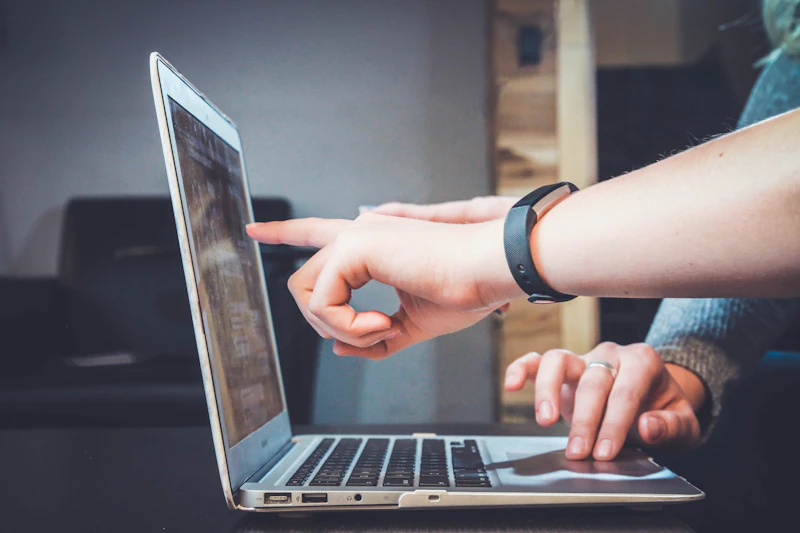
San Diego photographers in 2026 need AI tools for culling, editing, and client delivery at scale. The tested 2026 stack: Imagen AI for editing, Aftershoot for culling, Assisters for client communications, and Pic-Time for galleries — cutting post-production by an estimated 60–80% without outsourcing to an external editor.
- Best style-based editing: Imagen AI
- Best culling: Aftershoot
- Best client comms: Assisters
- Best galleries + sales: Pic-Time
San Diego's photography market is unusually dense: a large annual wedding industry, a heavy military presence driving family and milestone photography, and year-round shooting weather that produces some of the highest session volumes in California. At that volume, editing bottlenecks directly cap profitability. AI tools that learn your personal editing style cut post-production dramatically while keeping the look consistent — which means more dates booked and more weekends back.
This guide covers the practical stack, the local market context, and how to set it up in an afternoon.
Why Photographers in San Diego Need AI Tools in 2026
The San Diego wedding industry alone generates substantial annual revenue, and with session volume this high, the constraint is rarely finding clients — it's delivering galleries fast enough to take the next booking. The bottleneck is structural: a single wedding can produce several thousand raw frames, and a busy spring-to-fall season stacks those weekends back to back. When the editing queue grows faster than you can clear it, you start declining inquiries not because the calendar is full but because the laptop is. That is the silent ceiling most working photographers hit, and it is exactly what AI removes.
AI compresses the three slowest stages of the pipeline:
- Culling — AI sorts thousands of frames and flags the keepers in minutes, catching blinks, soft focus, and near-duplicate bursts that would otherwise eat an evening.
- Editing — style-trained AI applies your look across an entire gallery consistently, so the hundredth image matches the first without per-frame fiddling.
- Client delivery — AI-assisted galleries speed selection, proofing, and print sales, turning the handoff into a revenue moment instead of an afterthought.
The math is straightforward: faster turnaround means more shoots per season at the same quality. A photographer who reclaims even one full editing day per wedding can add several bookings across a peak season — and in a market where dates in La Jolla and Coronado sell out months ahead, those reclaimed days are pure margin. Just as important, consistent turnaround builds a referral reputation: couples who receive their gallery in days rather than weeks become your loudest marketing channel.
Top AI Tools for Photographers in San Diego
| Tool | Use Case | Free Tier | Best For |
|---|---|---|---|
| Imagen AI | Style-based editing | Trial credits | Weddings + portraits |
| Aftershoot | Culling + edit | Trial | High-volume shooters |
| Assisters | Client comms | Yes | Inquiry responses |
| Pic-Time | Galleries + AI | Trial | Delivery + sales |
| Topaz Photo AI | Retouch | One-time | Difficult images |
| Luminar Neo | AI edits | One-time | Landscape + travel |
Confirm current pricing and free-tier limits with each vendor.
Imagen AI and Aftershoot are the two specialist tools that learn your style, Topaz Photo AI handles tough retouching, and Assisters drafts inquiry responses and client emails through an OpenAI-compatible API.
To set expectations before the deep dives, here is how each stage of a typical wedding or portrait workflow maps to a tool and where the time actually disappears.
| Workflow stage | Primary tool | Where the time goes today | What AI removes |
|---|---|---|---|
| Culling | Aftershoot | Manual one-star passes over thousands of frames | Duplicate, blink, and focus rejection in bulk |
| Color + tone edit | Imagen AI | Per-image sliders, drift across the gallery | Style-profile application across all keepers |
| Problem-image rescue | Topaz Photo AI | Hand retouching noise, blur, low resolution | Denoise, sharpen, and upscale in one pass |
| Gallery + sales | Pic-Time | Manual proofing and print-order chasing | AI selection, reminders, and store automation |
| Client comms | Assisters | Re-typing the same inquiry replies | First-draft responses you personalize |
Time savings vary by shooter, gear, and training data — treat the stages as a map, not a guarantee.
AI Culling at Volume: Clearing the First Bottleneck
For a high-volume San Diego shooter — think a Saturday wedding in Balboa Park followed by a Sunday family session in Coronado — culling is the stage that quietly destroys the most hours. A two-photographer wedding team can return six to eight thousand frames, and the traditional approach of a manual rating pass means staring at near-identical burst sequences deep into the night. Aftershoot attacks this directly: it scans the full set, groups duplicates, and surfaces the technically strongest frame from each cluster while flagging closed eyes and missed focus.
The workflow that holds up in practice is to cull before you touch a single slider. Import the raw set into Aftershoot, let it produce a first selection, then do a quick human review of its picks rather than the whole shoot. You are no longer deciding among ten versions of the same first-dance moment; you are confirming the one the tool already isolated. This inverts the effort — the machine does the exhaustive comparison, and you spend your judgment only where it matters, on the borderline emotional frames where your taste as the artist is the actual product.
Two habits keep culling honest. First, never let the tool make the final cut alone on hero moments — the ceremony kiss, the homecoming embrace at Naval Base San Diego, the portrait the family will print large. Review those manually. Second, feed the tool consistent input: a stable exposure discipline in-camera makes its confidence scores far more reliable. Done well, culling drops from an evening to a coffee break, and that single change is often what makes the rest of the AI stack worth adopting.
Style-Trained Editing for a Consistent Gallery
Once the keepers are chosen, consistency is the whole game. A wedding gallery that drifts in white balance and contrast from getting-ready shots to the reception reads as amateur even when each individual frame is fine. Imagen AI solves this by learning from your own past edited galleries — you point it at thousands of images you have already finished, and it builds a personal profile that reproduces your color, tone, and crop tendencies across a new set. The result is a gallery that looks like you edited every frame, because in effect you trained the editor to be you.
The key distinction worth internalizing is that this is style transfer from your own work, not a generic filter. A La Jolla cliffside wedding at golden hour and a Balboa Park portrait under harsh midday sun need different handling, and a well-trained profile carries enough of your decision-making to adapt. You still own the final pass: Imagen AI applies the look, and you fine-tune the handful of frames — mixed lighting, a tricky skin tone, a backlit veil — that deserve individual attention. The 60–80% post-production reduction comes from never again hand-editing the ninety percent of images that only need your standard treatment.
For photographers who want to understand the underlying mechanics of AI editing before committing to a profile-based workflow, our walkthrough on how to use AI to edit photos breaks down where these tools excel and where a human hand is still mandatory. The short version: AI is exceptional at consistency and volume, and still weak at the rare creative override — which is precisely why the hybrid model wins.
Retouching Tough Images with Topaz
Every real shoot produces a few images that are emotionally essential and technically compromised. The homecoming shot at Camp Pendleton was the only frame of that exact expression, but it was grabbed at high ISO in fading light. The candid laugh during the toast is perfect except for motion blur. These are the frames where a generalist editor stalls, and where Topaz Photo AI earns its place in the stack. It bundles denoising, sharpening, and upscaling into a single model-driven pass, recovering detail that manual sliders simply cannot.
The practical pattern is to treat Topaz as a rescue stage, not a default. Run your culled keepers through Imagen AI for the consistent base look, then route only the problem children — the noisy, the soft, the under-resolved — through Topaz Photo AI. Trying to denoise every frame wastes time and can over-smooth clean images; reserving it for the genuinely difficult ones preserves both quality and your evening. It is also the tool that lets you confidently shoot in San Diego's trickier conditions, from dim reception venues to the deep shade of Balboa Park's colonnades, knowing the salvageable frames can be salvaged.
A related use case is resolution: when a client wants a large canvas print of a frame shot at the wrong settings, AI upscaling can make the difference between declining the sale and fulfilling it. For a deeper comparison of upscaling options across tools, see our guide to the best AI image upscalers. Recovering one print-worthy hero from a difficult set frequently justifies the tool on its own.
Client Galleries and Print Sales via Pic-Time
Delivery is not the end of the job — it is the most overlooked revenue stage in the business. Pic-Time turns the gallery handoff into a store, with AI-assisted selection that helps clients find their favorites quickly and automated prompts that nudge print and album orders without you sending a single manual follow-up. For San Diego portrait and family photographers especially, where one Coronado beach session can serve grandparents, parents, and extended family all wanting prints, the difference between a passive download link and an active sales gallery is measured in real dollars.
The workflow benefit compounds with the rest of the stack. Because your culling and editing are now fast, you deliver while the emotion of the day is still fresh — and a gallery that arrives days after a wedding sells far better than one that arrives a month later when the excitement has cooled. Pic-Time's automation handles the unglamorous parts: order reminders, abandoned-cart nudges, seasonal print promotions. You set it up once and it works on every gallery thereafter, converting delivery from a chore into recurring passive income across your entire client base.
There is a reputational dividend too. A polished, branded gallery experience signals professionalism to exactly the referral-driven, high-trust clientele that the La Jolla and Coronado markets reward. The same speed that lets you book more weddings also makes each delivered gallery a marketing asset, because clients share galleries they are proud of — and every share puts your work in front of the next couple planning a San Diego wedding.
Client-Communication Automation and Booking
Inquiry response speed is one of the strongest predictors of whether a lead books, and it is the part of the business most photographers handle worst because it competes directly with shooting and editing time. This is where Assisters fits: it drafts inquiry responses, availability replies, and routine client emails through an OpenAI-compatible API, giving you a fast, on-brand first draft you personalize before sending. Responding within minutes instead of days, even with a draft you then refine, measurably increases booking rates in a competitive market.
The deeper opportunity is building automation that fits your exact workflow rather than bending to someone else's CRM. Because Assisters exposes a standard API, a technically inclined photographer — or a developer they hire — can wire inquiry handling, follow-up sequences, and even gallery-ready notifications into the tools they already use. That same API powers a build-it-yourself path on privacy-respecting infrastructure rather than locking your client data inside an opaque third-party platform.
For the full business-process view — booking funnels, contracts, follow-up cadences, and where automation pays off first — our companion guide on automating a photography business workflow goes considerably deeper than this section can. The principle that ties it together: automate the repetitive communication so your human attention is reserved for the moments — the consultation, the shoot, the reveal — where it actually changes the outcome.
Set Up Your Stack in an Afternoon
You do not need a multi-week migration to adopt this stack. A focused afternoon gets the core pipeline running, and you refine it across your next few shoots.
- Train your style in Imagen AI or Aftershoot using past edited galleries. The more representative your training set, the closer the first results land — pull a mix of lighting conditions you actually shoot in.
- Cull first with Aftershoot to eliminate rejects fast, then human-review only its selections rather than the entire raw set.
- Edit the keepers with your style profile for a consistent look, fine-tuning only the handful of mixed-lighting or skin-tone outliers by hand.
- Rescue the difficult frames with Topaz Photo AI — denoise, sharpen, or upscale only the problem images, never the whole gallery.
- Deliver and sell through Pic-Time's AI-assisted galleries, switching on order reminders and print promotions so sales run on autopilot.
- Automate inquiries with Assisters so you respond fast and book more, treating every draft as a starting point you personalize.
The sequencing matters: cull before edit, edit before rescue, deliver before you chase the next lead. Get the order right and the time savings stack instead of overlapping. Start with culling and client comms if you want the fastest visible win — those two changes alone tend to free up the most hours in the first week.
San Diego Market and Industry Context
San Diego's professional photography community is well-organized, with active local groups and the major WPPI conference within easy reach in nearby Las Vegas — close enough that the city's wedding and portrait shooters treat it as a home-turf industry event for education, gear, and networking. The strongest local markets break down cleanly by neighborhood: La Jolla for weddings, drawn by the cliffs and golden-hour light; Coronado for military and family sessions against the iconic beach and hotel backdrops; and Balboa Park for portraits, with its architecture and gardens offering endless variety in a single location.
The military presence is the market's defining feature. Naval Base San Diego and Camp Pendleton drive steady, recurring milestone-photo demand — deployments, homecomings, and promotions all create reliable bookings that are far less seasonal than weddings alone. That mix of high-emotion, time-sensitive military sessions and volume-heavy wedding work is precisely the combination AI tooling serves best: homecoming galleries need to be delivered while the moment is fresh, and wedding galleries need to be delivered without burning out the photographer mid-season. A stack tuned for both speed and consistency fits the San Diego shooter better than it fits almost any other market in the state.
The year-round shooting weather, often cited as the region's advantage, is also what creates the pressure. There is no slow winter to catch up on a backlog, so the editing queue never naturally clears — it only grows unless the workflow itself is fast. That structural reality is why local photographers tend to adopt culling and editing automation earlier and more aggressively than peers in markets with a seasonal off-period.
Copyright of AI-Edited Work and Client-Data Privacy
On the legal side, the copyright rules for AI are the same in California as elsewhere: human-directed AI editing of your own photographs is protectable, while purely AI-generated imagery with no human authorship is not. Since the tools in this stack edit your captured work rather than generate it from scratch, AI-assisted editing keeps your images firmly protectable. You pressed the shutter, you directed the edit, and the AI is an instrument applying your decisions — which is exactly the human-authorship the law recognizes. The distinction to remember is between editing a photograph you took (protected) and generating an image from a text prompt (the contested gray area), and this entire workflow lives squarely on the protected side.
Client-data privacy deserves the same deliberate attention as copyright. Wedding and family photographers handle deeply personal material — images of children, home addresses in delivery details, private milestone moments — and routing that through cloud tools means choosing vendors carefully. Read each tool's data-handling terms, understand whether your images or client communications are used to train shared models, and prefer infrastructure that keeps your data yours. For photographers who want to build their own client-communication or booking tools on privacy-respecting infrastructure, the Misar AI suite and the Assisters API provide a build-it-yourself path that avoids surrendering client data to an opaque platform. Treating privacy as a feature you offer clients, not just a box you tick, is increasingly a competitive advantage in a high-trust market.
Frequently Asked Questions
Does AI culling really save high-volume shooters time?
Yes — for wedding and event photographers shooting thousands of frames, AI culling tools like Aftershoot can reduce the sorting stage from hours to minutes by flagging duplicates, blinks, and out-of-focus shots automatically. You still make the final selection, and you should always review the hero moments by hand.
Will AI editing match my personal style?
Tools like Imagen AI and Aftershoot learn from your past edited galleries to apply a consistent look. The match improves with more training data, and you can always fine-tune individual images afterward. Feed the profile a representative spread of the lighting conditions you actually shoot in for the best first results.
Are AI-edited photos still protected by copyright?
Yes. Human-directed editing of your own captured photographs is protectable. The copyright concern applies only to purely AI-generated imagery with no human authorship — which is not what these editing tools produce. Because you took the photo and directed the edit, the human-authorship requirement is met.
What's the fastest part of the workflow to automate first?
Culling and client communications usually deliver the quickest wins. Culling removes the most tedious manual step, and automating inquiry responses helps you book more sessions by replying faster — both pay off within the first week.
Can I use AI for client emails without sounding generic?
Yes, if you treat AI drafts as a starting point. Tools like Assisters can produce a fast first draft of inquiry responses that you then personalize with your voice and the specific details of each client. The speed of replying matters as much as the polish.
Do I need to be technical to build my own automation?
Not to use the core stack — Imagen AI, Aftershoot, and Pic-Time work out of the box. But because Assisters exposes a standard OpenAI-compatible API, a technically inclined photographer or a hired developer can wire custom inquiry handling and follow-up sequences into existing tools, which is the path to a workflow tailored exactly to your business.
Conclusion
San Diego's combination of dense wedding demand, recurring military milestone work, and year-round shooting weather makes it one of the toughest markets in California to keep up with — and one of the most rewarding once your post-production stops being the bottleneck. The 2026 stack of Imagen AI for editing, Aftershoot for culling, Topaz for rescues, Pic-Time for delivery, and Assisters for communication can cut post-production by an estimated 60–80% while keeping your look consistent and your client data yours. Set it up in an afternoon, refine it across a few shoots, and reclaim the weekends the work used to take.
If you want to go further and build client-communication or booking automation that fits your exact workflow on privacy-respecting infrastructure, explore the Assisters API and the broader Misar AI ecosystem. Start with the stage costing you the most hours, get one win, and let the rest of the stack follow.
Frequently Asked Questions
Quick answers to common questions about this topic.